'/%3E%3C/svg%3E)


Cuisine is an integral part of Réunion Island’s identity: generous, fusion-inspired, and always a real treat… it is inextricably linked to a sense of togetherness. In Réunion, meals are, above all, meant to be shared. We get together on Sundays, cook as a family, go for picnics, share food, and tell our best stories around a well-laid table!
If you’re visiting Réunion for the first time and are looking for the must-try dishes you simply mustn’t miss, this article is for you. Here’s an updated selection of Réunionese dishes you absolutely must try during your visit… you might recognise some of them, as their reputation has travelled across the oceans.
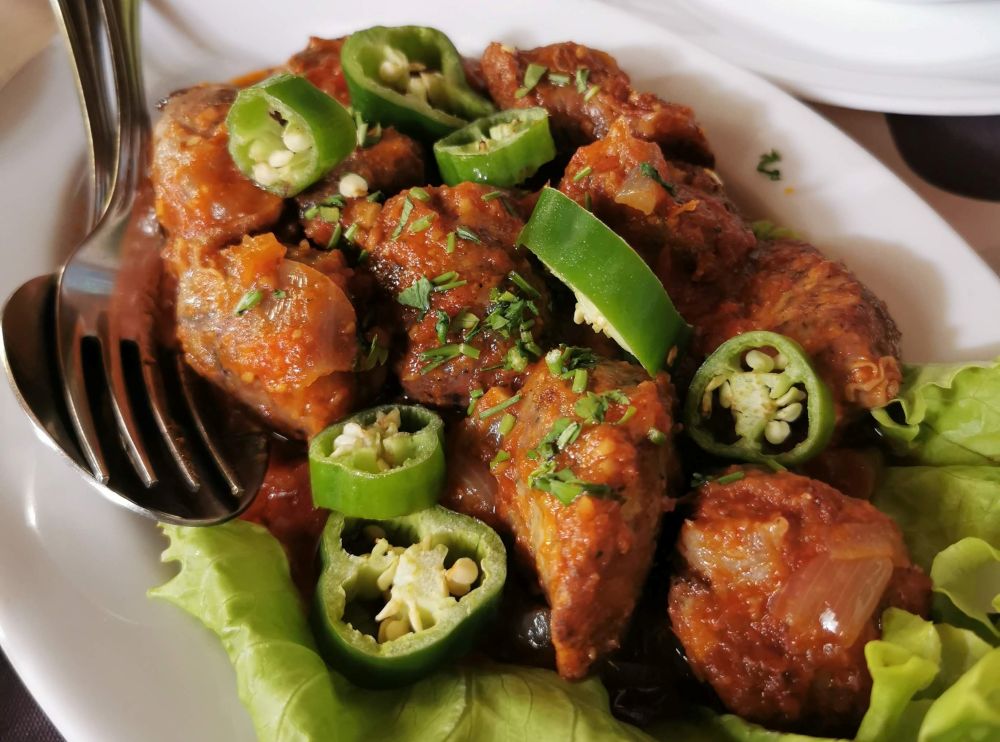
#1 Rougail saucisse, THE Réunion classic
How could you not have heard of it? Over the years, “rougail” with sausage has become Réunion’s signature dish and is undoubtedly the best known outside the island: Creole sausages simmered with tomatoes, onions, garlic, turmeric and thyme, served with white rice and beans – that’s the traditional recipe… or at least that’s how I make it.
It’s a thoroughly family-friendly dish – easy to make, comforting, and perhaps one of the ones I miss the most on a day-to-day basis! That’s why… I cook it regularly in Paris. I’d like to take this opportunity to point out that if you don’t have traditional Creole sausages to hand, those living in France can try their hand at rougail saucisses using Montbéliard, Morteau or country-style sausages: it doesn’t taste quite the same, but… when well seasoned, it’s just as delicious!
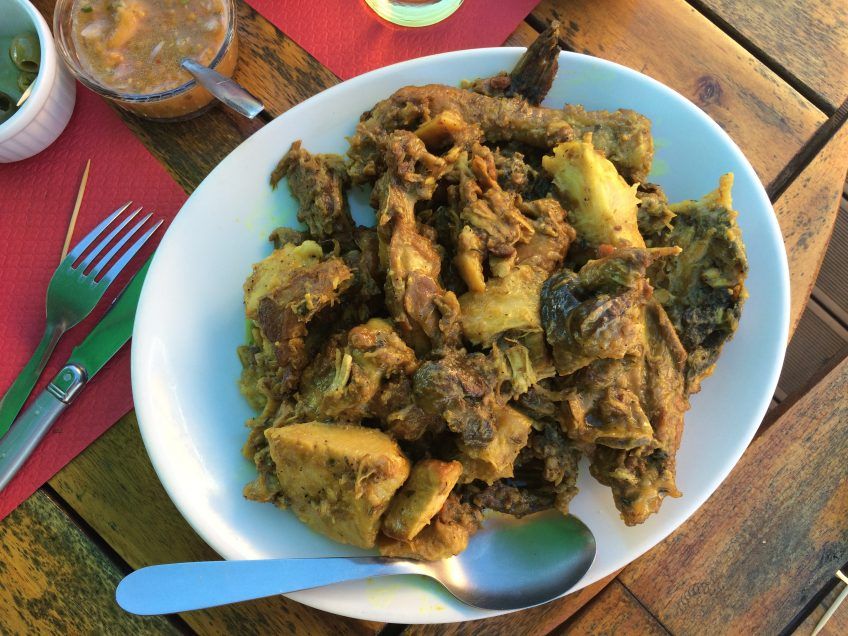
#2 Cari poulet (chicken cari), a traditional and convivial dish
This is a chicken dish in a sauce with a blend of spices. When I make a chicken cari, I fry onions, garlic and tomatoes, then add spices (turmeric and thyme – I must admit I like to add a little ginger). And finally the chicken, preferably browned beforehand. It’s best to simmer the chicken gently for about an hour in a generous amount of fairly runny sauce, so that the flavour really comes through!
You can actually make caris with all sorts of meat: chicken, pork, ‘boucané’ (smoked pork belly), fish, prawns… And the recipes are pretty much the same. Chicken cari remains, however, the most traditional version. What’s the difference between a “cari” and a “rougail”, you might ask? The chef at the restaurant ‘Le Vieux Créole’ in Saint-Denis, whom I was lucky enough to meet whilst working on my podcast Bat’ karé’s audio guide ‘Voyage à La Réunion’, explained to me that a rougail is very rapid to make.
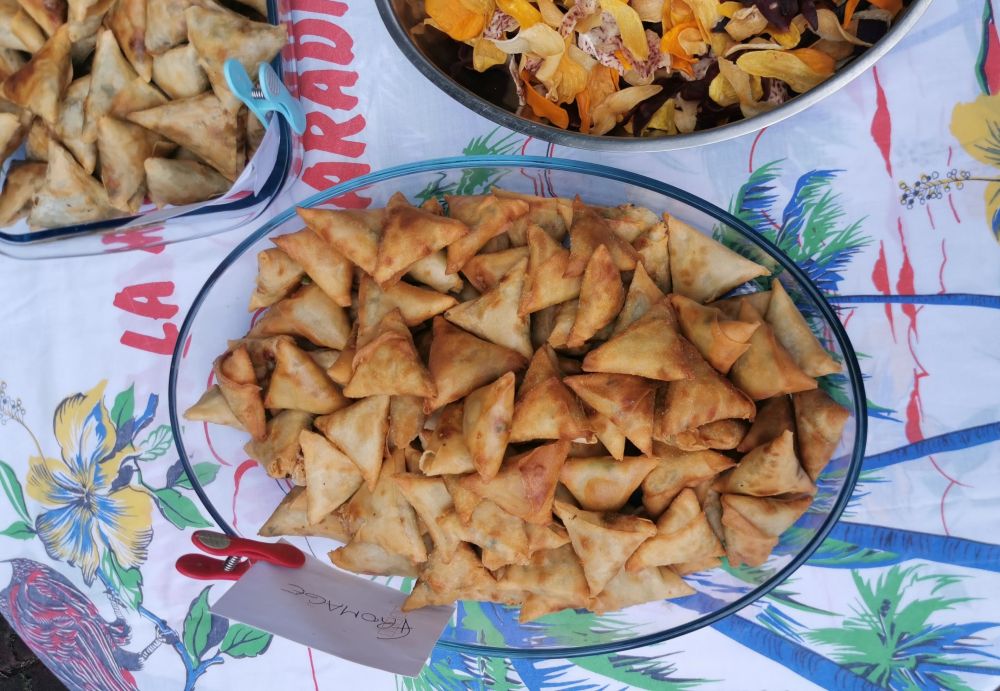
#3 Samosas from Réunion: the perfect snack!
If you’ve ever heard the Indian word ‘samosa’ and are familiar with these triangular pastries filled with meat, these little fried triangles are of Indian origin, but they’ve been adopted and adapted to suit Réunionese tastes. Smaller than their original cousins, they are traditionally made with beef but are now available with chicken, cheese, vegetables, “sarcives” (Chinese-style glazed pork) and even sweet fillings!
A samosa costs between €0.40 and €0.60 each, and you can buy them at most street markets, from food trucks by the sea, and at specialist snack bars in town.
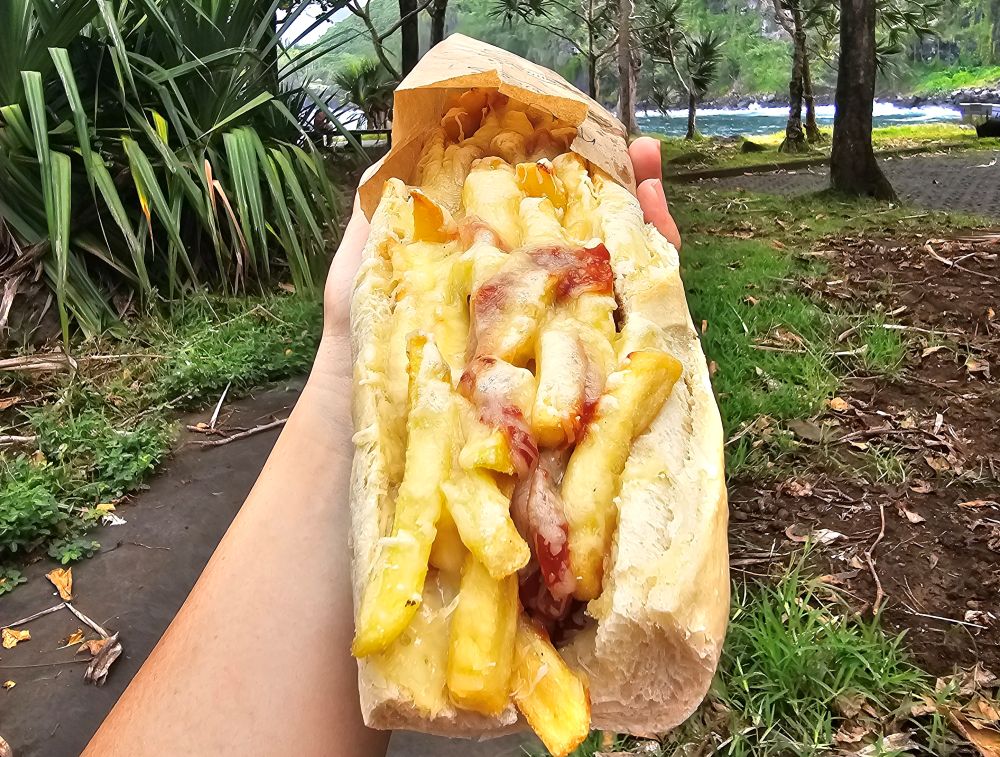
#4 Réunionese ‘bouchons’ (and the famous American ‘bouchons’ with grated cheese sandwich)
The ‘bouchon’ is a small steamed pork-based snack, sold as ‘street food’ – yet another modern term, even though food trucks have been around on the island for ages… The best ones are eaten by the sea, in a tray with “siave” (soy sauce), ketchup and chilli :p
A popular variation amongst secondary school pupils: in a grilled American-style sandwich (with chips and cheese). I have fond memories of my Friday ‘grilled-cheese American sandwich with bouchons’ bought from the food van at the top of the school, when we had longer lunch breaks than usual.
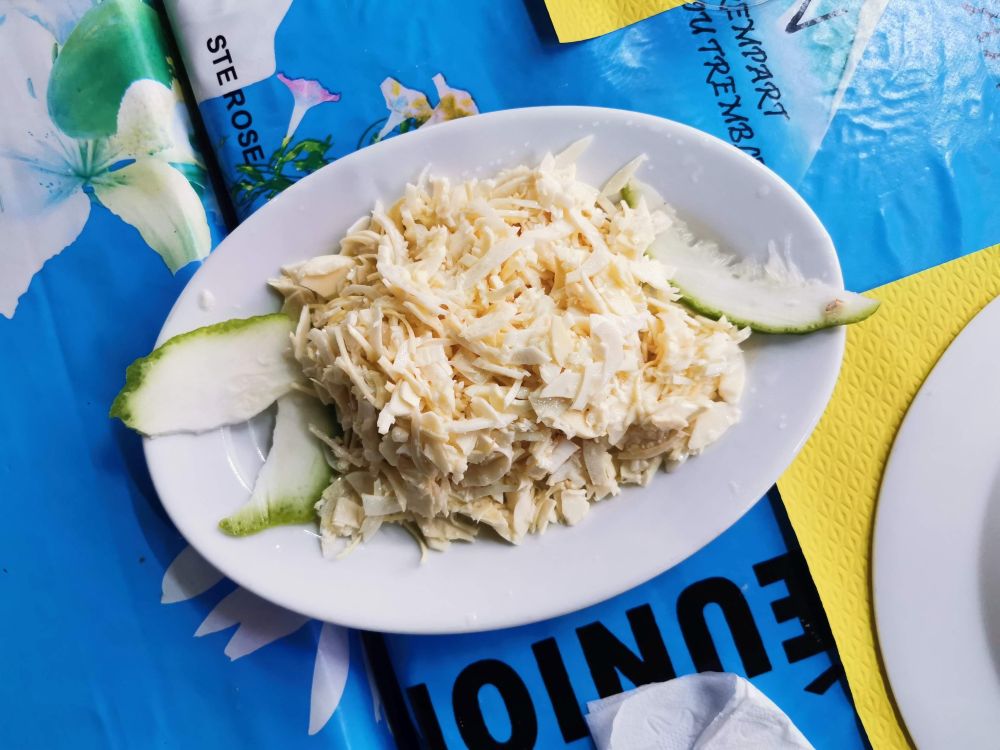
#5 Palm heart salad: a refreshing and refined dish from Réunion
The difficulty involved and the time required for the palm heart to mature meant that this dish was rather rare a few years ago. Today, it takes ‘only’ five years for the most basic varieties to be ready for consumption. Palm heart salad consists of a palm heart cut into strips, served with a vinaigrette.
The restaurants in the Cap Méchant group are the most famous ‘suppliers’ of this dish in Réunion. If you’re looking for red palm hearts (which are of a higher quality), you’ll find them in the best table d’hôte establishments in the ‘Sud Sauvage’ (Wild South) region and in certain well-stocked Creole restaurants.
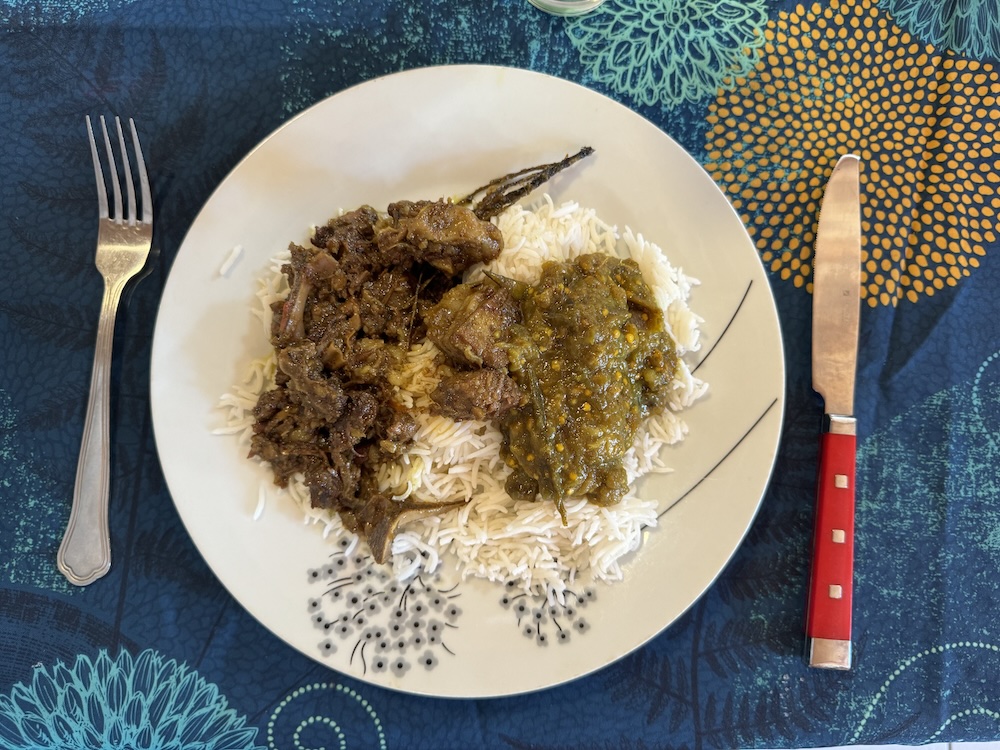
#6 Cabri massalé: for spice lovers
A dish traditionally prepared by Indian families in Réunion, which has become firmly established in Réunionese cuisine in general. ‘Cabri’ means ‘goat’. The meat is braised in a pot with onions and spices, including ‘massalé’. This is a powder made from a blend of different spices: coriander, cumin, cardamom, nutmeg, cloves, cinnamon, and varying amounts of chilli… but every family tends to prepare it differently (everyone has their own little secrets)!
You can, however, buy ready-made mixes in all the markets and in many small shops (greengrocers, butchers, etc.). In fact, it’s one of the lovely souvenirs you can bring back from Réunion if you have friends who love cooking.
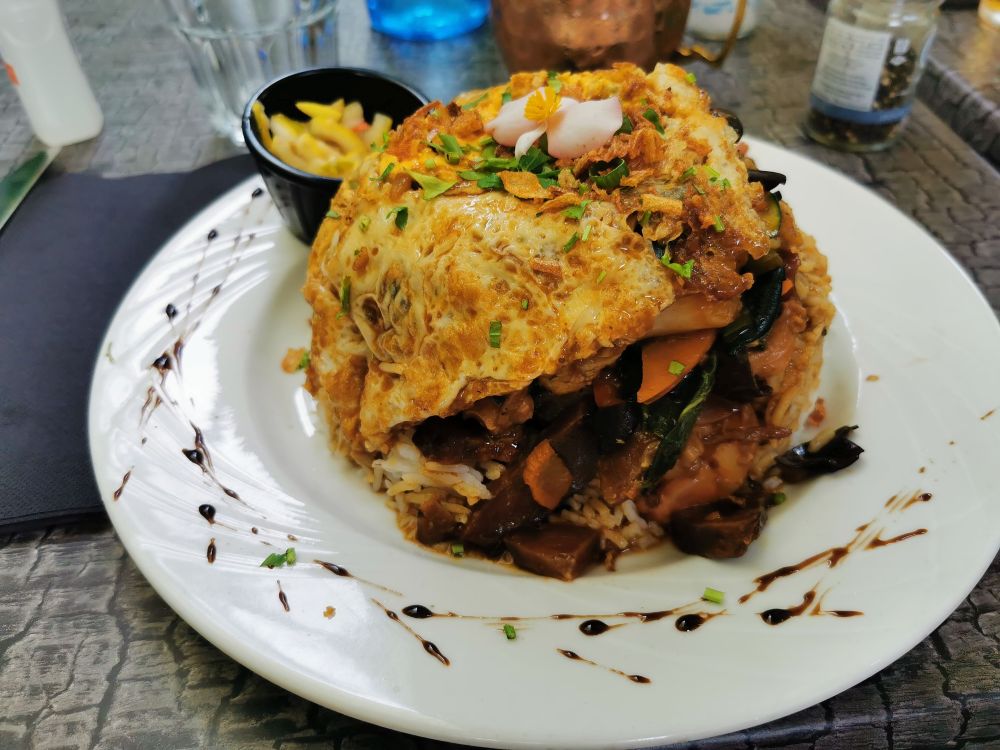
#7 The ‘upside-down bowl’, a signature dish of Sino-Réunionese cuisine
A Sino-Réunionese dish that, as far as we know, is only found in Réunion or Mauritius (has anyone ever come across it anywhere else?). Take a large bowl, place a fried egg in it, then add a stir-fry of meat, prawns, mushrooms, greens and other vegetables. Finish filling the bowl with rice. Then cover it with a plate and turn the whole thing over: it’s ready – you’ve made an ‘upside-down bowl’! It’s one of my father’s favourite dishes, and the first dish I ever cooked for my partner to introduce him to Réunionese cuisine.
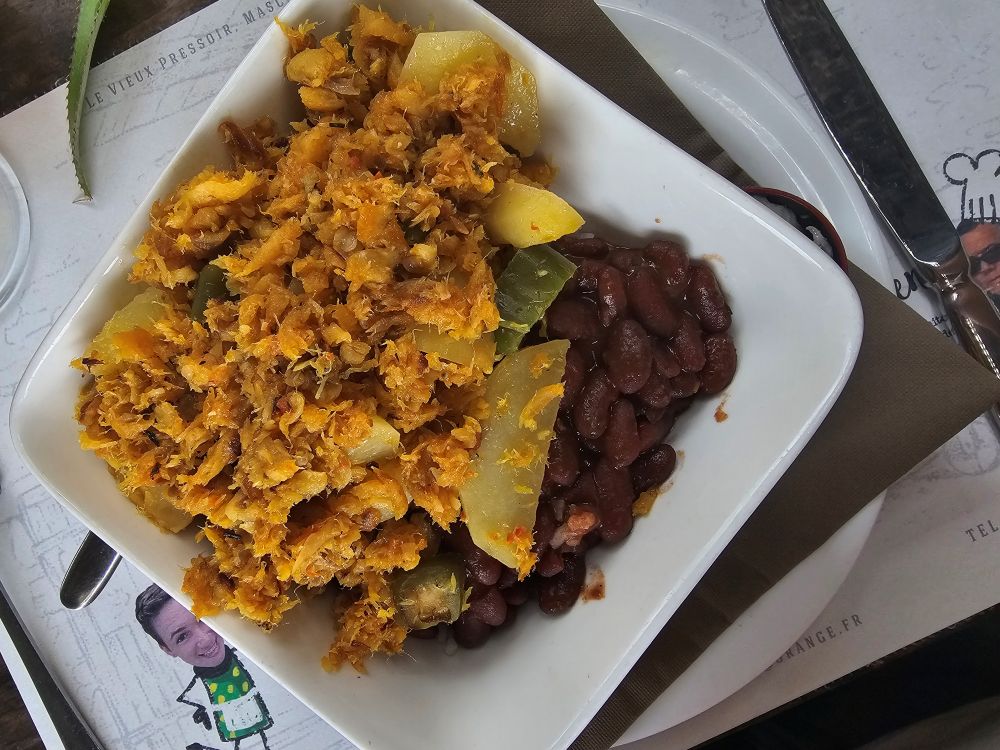
#8 Rougail morue: a dish dating back to the days of colonial trade routes
It’s also a great classic of Réunionese cuisine! “Rougail morue” is made with dried and salted fish, a preservation technique introduced by the Portuguese, who imported it in the early days of colonisation. Even today, cod is still eaten in Réunion: it is soaked for 24 hours to remove the salt, then flaked and fried in a tomato sauce with onions, garlic, ginger and chilli.
It’s a simple dish but not that easy to get right: many of us insist on ‘drier’ cod and don’t like it when the rougail morue is ‘too wet’… apparently, the secret lies in patience and slow cooking, which helps to reduce the fish’s bitterness. It is served with white rice and beans (white beans are often a good choice).
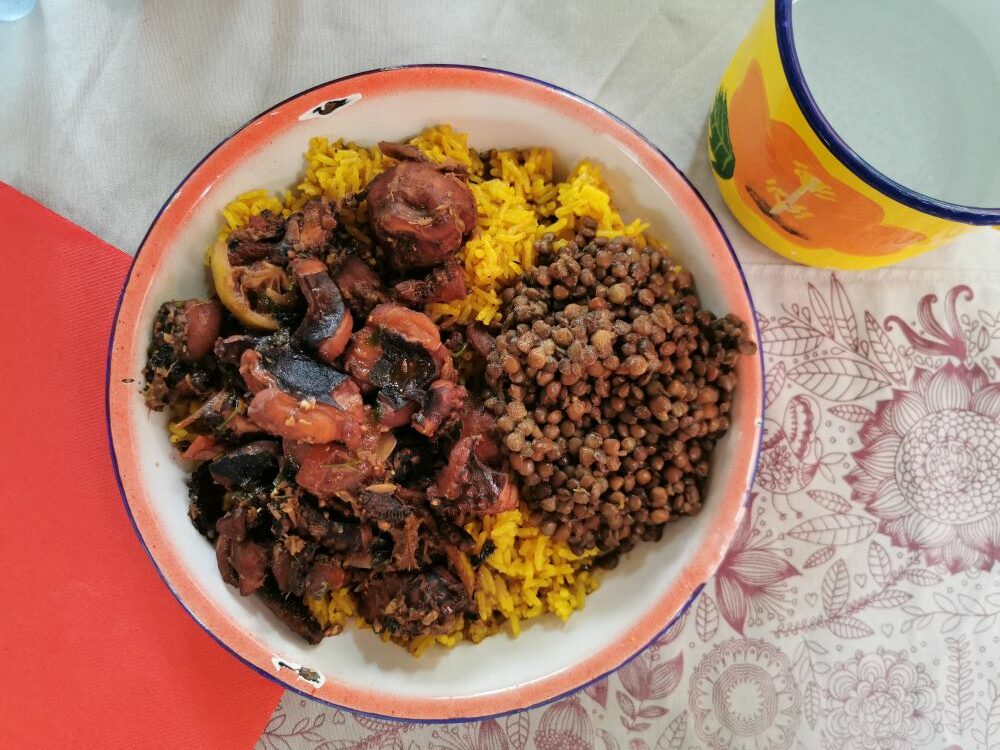
#9 Zourite stew: Creole octopus in red wine
‘Zourite’ is the Creole word for octopus, which needs to be prepared properly to tenderise it. Zourite stew is a slow-cooked dish, featuring a rich red wine sauce with tomato, garlic, ginger and spices. It is cooked slowly to tenderise the octopus until it melts in the mouth. Serve with rice, grains and a spicy rougail to balance the richness of the dish.
#10 ‘Cari Tijack’: smoked pork belly and Creole-style jackfruit
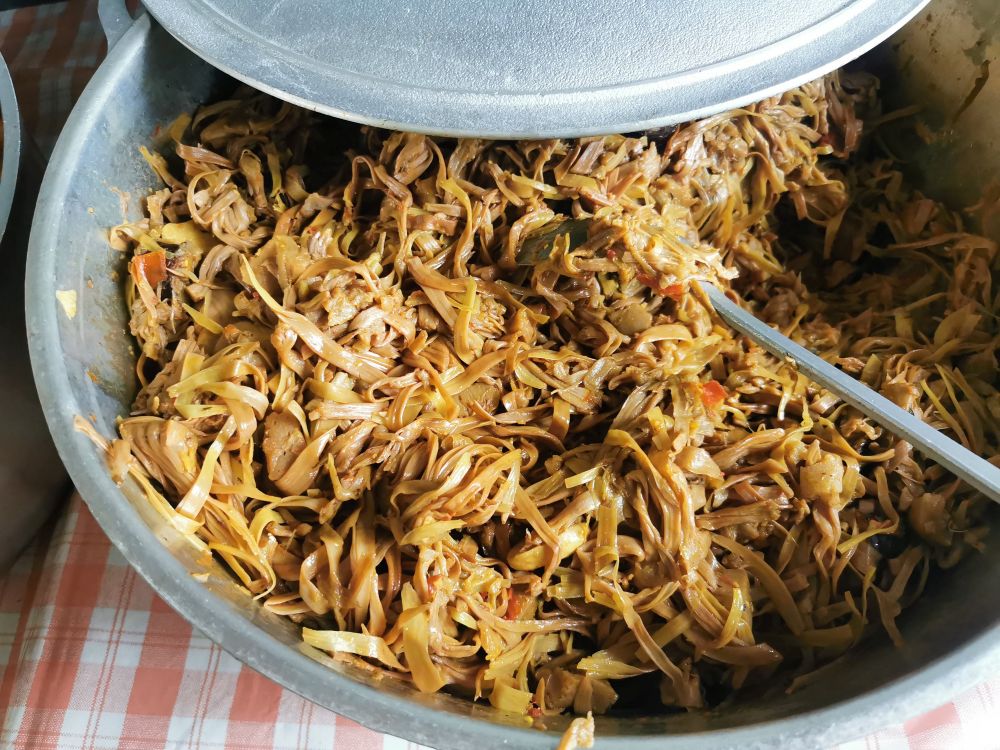
This is a rather special cari as it requires a very particular fruit: the jackfruit, known as ‘jack’ or ‘jacques’ in Réunion. It’s an Asian fruit with a bumpy, spiky skin and a surprising shape, which can grow to colossal sizes (up to 90 cm long) and weigh as much as forty kilos for the largest ones! It can be very fragrant, but its smell is different from that of durian, its cousin. The fruit has yellow segments inside. It’s becoming increasingly popular in vegetarian cuisine because, when cooked, the segments have a texture similar to pulled pork.
In short, to make ‘cari ti jacque boucané’, you finely chop the unripe fruit and combine it with ‘boucané’ (smoked pork belly), then fry the mixture in a cast-iron pot. The result is usually a melt-in-the-mouth dish, though not quite as flavourful as if the jackfruit had been ripe. Bear in mind that it takes time to chop the fruit finely, which is why people often buy it or order it already chopped at the market.
#11 Sweet potato cake
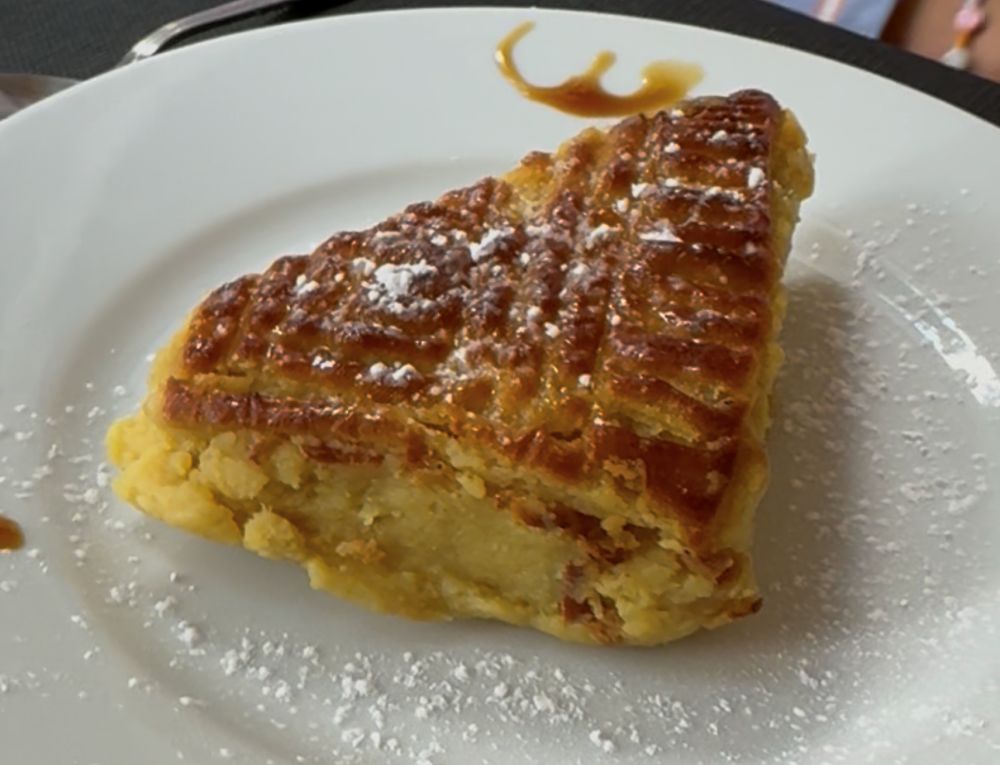
Perhaps the best-known local cake – you’ve no doubt tried it at the island’s street markets. Made from mashed sweet potato and always flavoured with vanilla pods, it’s now available in all sorts of variations (with chocolate chips, for example…). This iconic Réunion dessert is best enjoyed with a good cup of filter coffee!
This is, of course, by no means an exhaustive list… I haven’t mentioned ‘cari la pat’ (pig’s trotters), Creole-style roast pork, the various types of grains, or the many snacks and sweet treats we enjoy in Réunion. These will be the subject of one or more future articles – Réunionese cuisine is a subject that never runs dry.
And now, enjoy your culinary journey of discovery around the island!


No Comments